
Understanding Different Panel Enclosure Types for Industrial Applications


When it comes to protecting electrical systems in industrial environments, selecting the right panel enclosure type is more than just a design choice — it’s critical to safety, performance, and longevity. With a wide range of enclosure configurations available, each designed for specific use cases, understanding the differences can help engineers and project managers make informed decisions.

What Is a Panel Enclosure?
A panel enclosure is a protective housing designed to contain electrical components such as breakers, control switches, relays, and wiring. These enclosures are typically mounted on walls, floors, or embedded in systems, serving as the core of power distribution and control infrastructure.
The type of enclosure selected depends on environmental conditions, space constraints, and regulatory requirements.


Common Types of Panel Enclosures
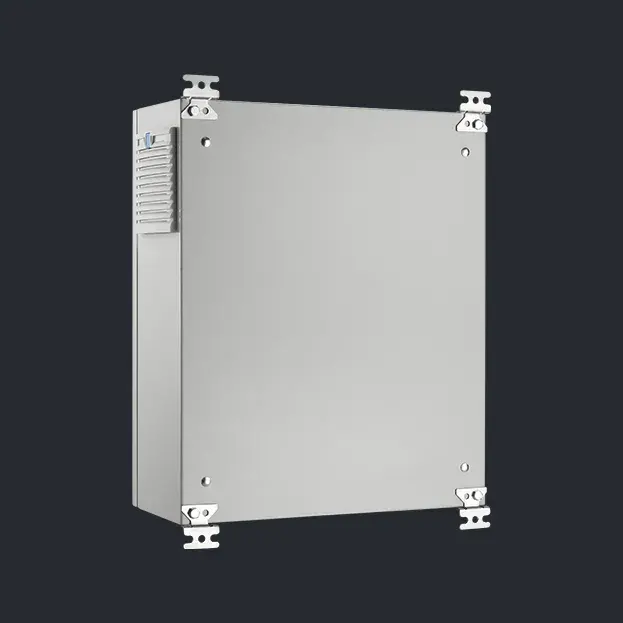
Wall-Mounted Enclosures

Floor-Standing Enclosures

Modular Enclosure Systems

Outdoor Enclosures
1. Wall-Mounted Enclosures
-
Best for: Compact installations, control panels, junctions
-
Features: Easy wall installation, front-door access, often IP65-rated
-
Materials: Mild steel, stainless steel, polycarbonate
Wall-mounted panel enclosures are a staple in control system integration. They are ideal for small automation panels or as terminal boxes in confined industrial environments.
2. Floor-Standing Enclosures
-
Best for: High-density control systems, main distribution panels
-
Features: Freestanding structure, dual-door access, internal mounting frames
-
Common Sizes: Height ranges from 1200mm to 2200mm
These are used in automation lines, BESS cabinets, or factory substations, especially when space is available on the ground and internal wiring requires modular layout.
3. Modular Enclosure Systems
-
Best for: Custom-built switchgear and automation systems
-
Features: Interconnected bays, flexible internal layout, high load capacity
-
Examples: ES cabinets, PS enclosures
Modular panel enclosures are configurable and scalable, offering the flexibility to adapt to project changes. They are commonly seen in European-style electrical panels and automation cabinets.
4. Outdoor Enclosures
-
Best for: Telecom, solar, and energy storage systems exposed to the elements
-
Features: Weatherproof design, UV resistance, optional sunshades and fans
-
Certifications: NEMA 4X, IP66, CE
These enclosures protect critical electrical systems from rain, dust, corrosion, and temperature extremes. A NEMA-rated enclosure is often used in these scenarios for compliance and safety.
Choosing the Right Type
Selecting the right panel enclosure type starts with evaluating these factors:
-
Indoor vs. outdoor environment
-
Degree of protection required (IP/NEMA rating)
-
Panel size and component density
-
Material needs (anti-corrosion, weight, grounding)
-
Local standards (UL, CE, IEC compliance)
For example, a BESS inverter control panel may require a sealed IP65 stainless steel wall-mounted enclosure with active ventilation, while a power distribution board for a factory may need a spacious floor-standing modular system.
Industry Applications
| Industry | Recommended Enclosure Type |
|---|---|
| Automation | Modular or floor-standing |
| Solar & Energy | Outdoor, IP66-rated |
| Building Management | Wall-mounted or flush-mounted |
| Oil & Gas | Stainless steel NEMA 4X |
| Telecommunications | Outdoor wall-mounted with ventilation |
Final Thoughts
Understanding different panel enclosure types helps you design better systems that are safer, more reliable, and easier to maintain. Each enclosure type is engineered for specific needs — and choosing the right one can save time, reduce risk, and support compliance from day one.
Looking for tailored panel enclosures for your project? Visit our industrial electrical enclosures page for engineered solutions designed for power distribution, automation, and energy systems.
You can also explore our expertise in custom enclosure design to get the perfect enclosure built to your exact specifications.
Related Blog
Why Surface Texture Matters for Powder-Coated Electrical Enclosures
2026-09-24

Why Overall Dimensions Are Not Enough for Electrical Enclosure Quotation
2026-09-05
What to Do If Electrical Enclosure Cutout Sizes Do Not Match Components on Site
2026-08-29
VFD Enclosure Cooling: Fan or Air Conditioner? Choosing the Wrong Solution Can Cause Overheating Problems
2026-08-09
Professional Enclosure Panel Manufacturer
Brings Excellent Services
How Can We Help Your Business?
- What is a wall mounted electrical enclosure?
A wall mounted electrical enclosure is a compact cabinet designed to house electrical components, providing protection from dust and water. Learn more on our Wall Mounted Enclosures page
- What is a freestanding electrical enclosure?
Freestanding enclosures, also known as floor standing cabinets, are large industrial cabinets that can hold multiple control panels or distribution boards. Explore options on our Freestanding Enclosure page
- What are modular enclosures?
Modular enclosures are flexible, scalable systems with baying frames that can be joined together to create custom layouts. See our Modular Enclosure page
- Why choose stainless steel enclosures?
Stainless steel enclosures (SUS304 / SUS316) are ideal for harsh environments due to corrosion resistance, durability, and long-term reliability. Check details on our Stainless Steel Enclosures page
- What does IP65 / IP66 protection mean?
IP65/IP66 ratings indicate the enclosure is dust-tight and protected against water jets. Perfect for industrial or outdoor applications. Learn more on our IP-Rated Enclosures page
- Can I customize the size, color, or cutouts?
Yes, we provide fully custom enclosures with adjustable sizes, RAL colors, CNC cutouts, PU gaskets, and UV-printed logos. Visit our Custom Enclosures page
for details
- What is the minimum order quantity (MOQ)?
MOQ depends on material, size, and customization. For standard enclosures, small batch orders are supported. Contact us via Contact page for details.
- Can I request a sample?
Yes, we provide samples for evaluation. Shipping costs may apply depending on location. See Sample Request for instructions
- How do I maintain or clean the enclosures?
Use a soft cloth and mild detergent. For stainless steel, avoid abrasive tools to preserve the finish. More tips on Maintenance Guide