
Why Surface Texture Matters for Powder-Coated Electrical Enclosures

Julian Zheng,[email protected]
2026-09-24
On This Page
Introduction
When choosing the surface finish for an electrical enclosure, many buyers only focus on the color. For example, they may simply request RAL7035, RAL7032, or another custom RAL color.
However, for powder-coated electrical enclosures, color is not the only factor. The surface texture is also very important.
Different powder coating textures can affect the appearance, durability, scratch resistance, defect coverage, and final visual effect of the enclosure.
For control cabinets, distribution boxes, outdoor enclosures, communication equipment, and industrial sheet metal cabinets, choosing the right powder coating texture can make the product more suitable for its application.
Common Powder Coating Textures for Electrical Enclosures
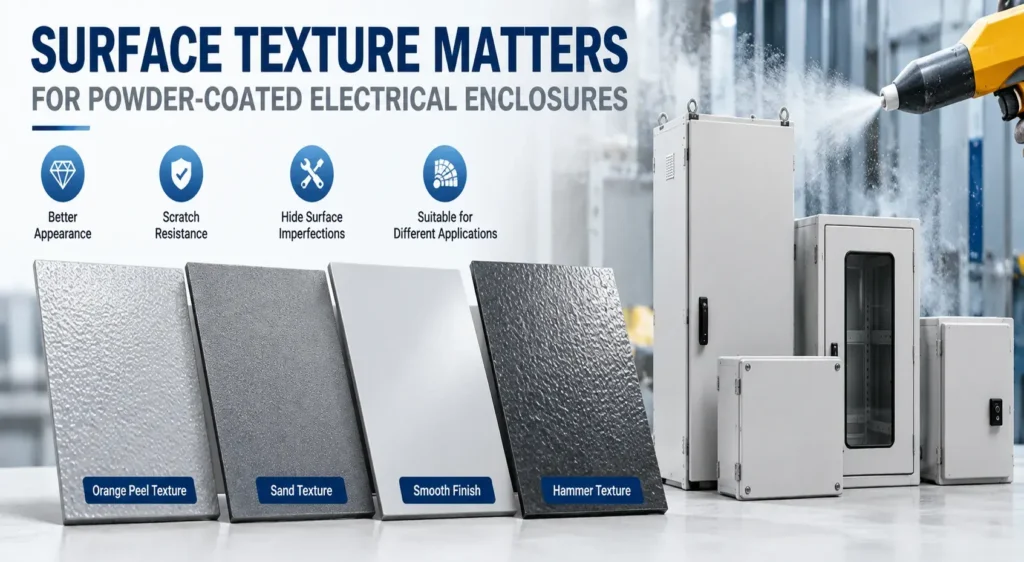
For sheet metal enclosures and control cabinets, common powder coating textures include:
Orange peel texture
Sand texture
Smooth finish
Hammer texture
Each texture has different visual effects and practical advantages.
Orange Peel Powder Coating
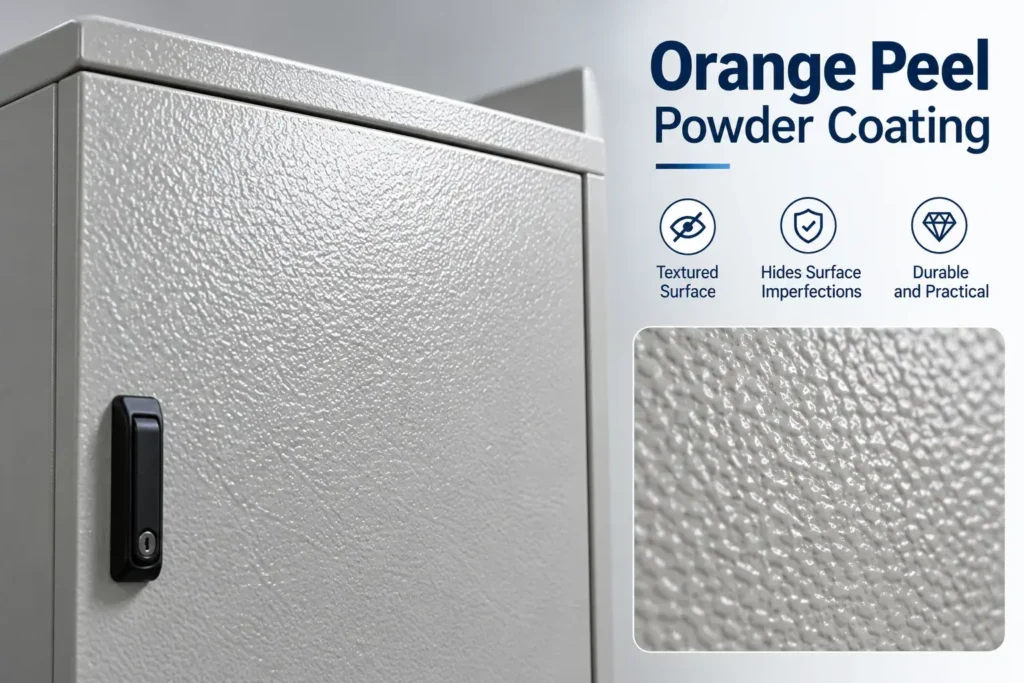
Orange peel powder coating creates a textured surface similar to the skin of an orange.
This surface has a stronger three-dimensional texture and can help cover small imperfections on the sheet metal surface. For this reason, orange peel texture is commonly used for electrical control cabinets, distribution cabinets, outdoor electrical enclosures, indoor control cabinets, and industrial sheet metal enclosure shells.
For general electrical enclosure applications, both indoor and outdoor, orange peel powder coating is one of the most widely used surface finish options. It offers a durable industrial appearance, helps hide minor surface defects, and provides a practical balance between appearance, protection, and production stability.
It is suitable when the enclosure needs reliable surface protection and does not require a completely smooth decorative finish.
Sand Texture Powder Coating
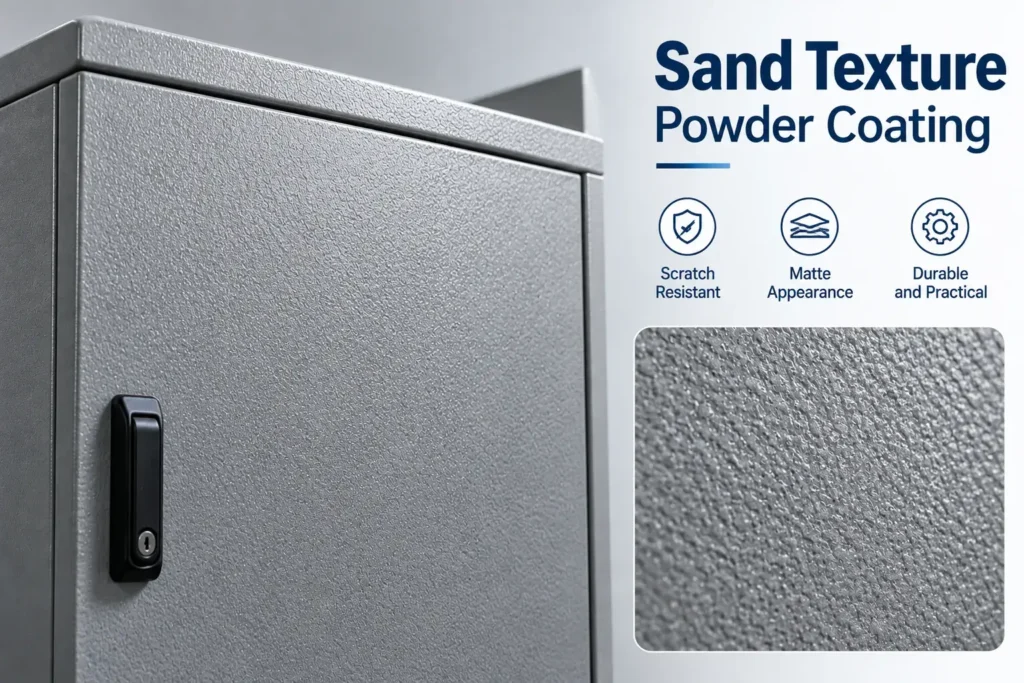
Sand texture powder coating has a matte and slightly rough surface.
It is often used for:
Computer cases
Communication equipment
Outdoor equipment
Frequently moved equipment
Industrial control boxes
The sand texture finish provides better wear resistance and scratch resistance compared with very smooth finishes. It is also less likely to show small scratches during handling, transportation, or daily use.
For electrical enclosures that may be frequently moved, installed, or handled on site, sand texture can be a practical option.
Smooth Powder Coating
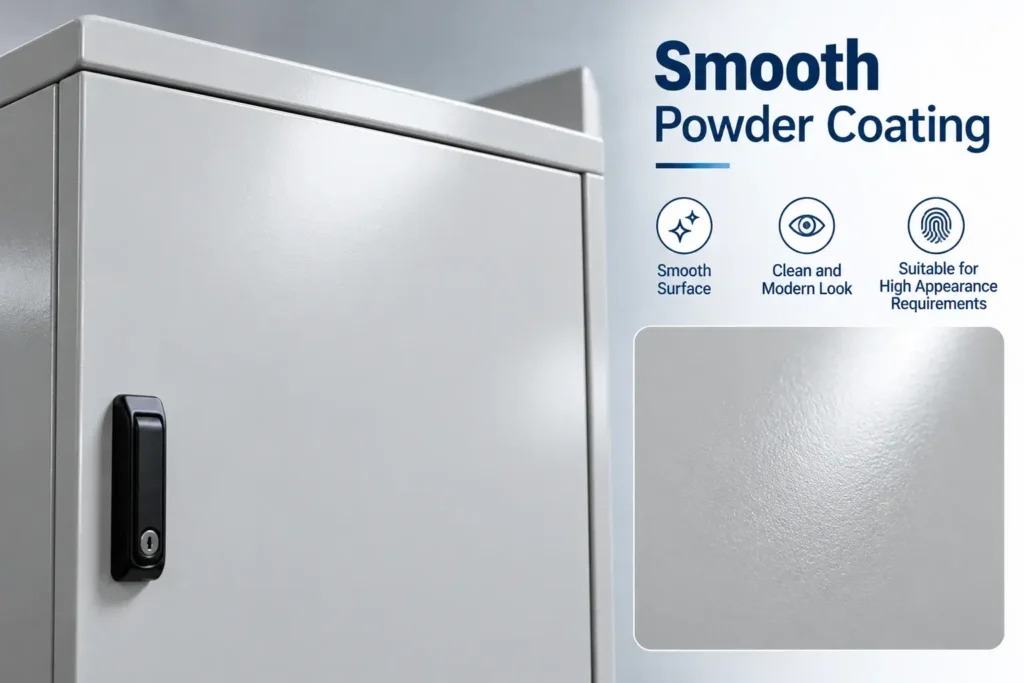
Smooth powder coating provides a flat and clean surface with a softer gloss appearance.
It is often used for products with higher appearance requirements, such as:
Self-service terminals
Banking equipment
Medical equipment enclosures
Display equipment housings
Commercial device shells
The advantage of smooth powder coating is that it looks clean and refined.
However, smooth surfaces also have higher requirements for the powder coating environment and process control. Dust, scratches, uneven coating, and surface defects are easier to notice on a smooth finish.
If the coating is too thick, smooth powder coating may also develop orange peel defects after baking.
Hammer Texture Powder Coating
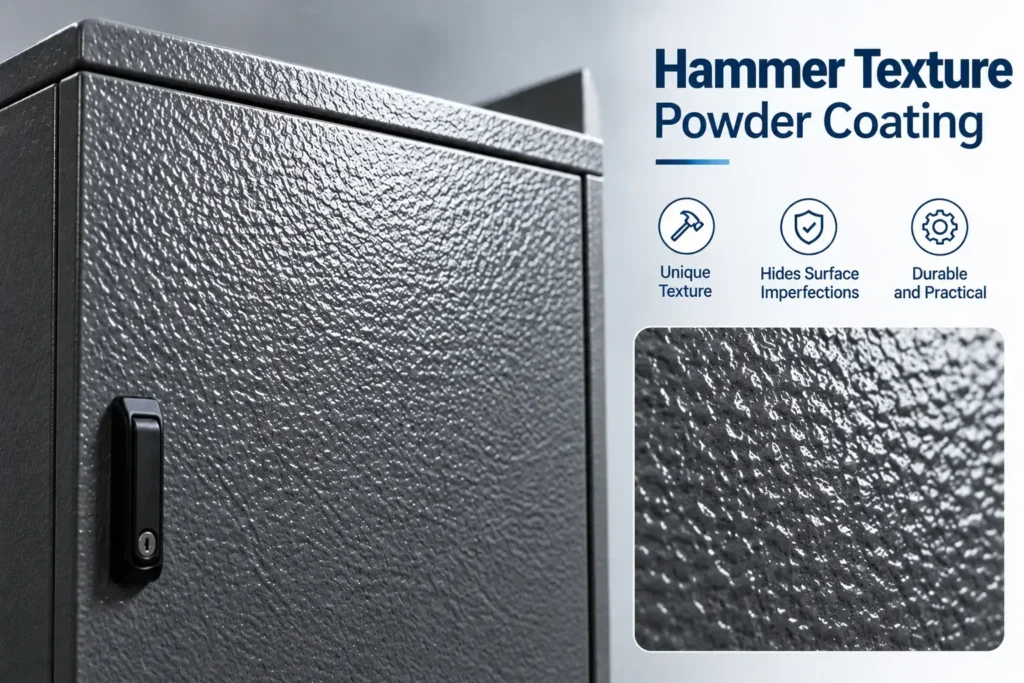
Hammer texture powder coating creates a strong metallic pattern.
This texture has a more obvious decorative effect and can help cover certain base material imperfections. It is suitable for applications where the customer wants a stronger visual texture or a more industrial metal-like appearance.
Hammer texture is less commonly used than sand texture or orange peel texture, but it can be useful for specific equipment housings and industrial products.
Typical Powder Coating Thickness by Texture
When selecting the surface texture, the coating thickness should also be considered. Different textures usually have different recommended coating thickness ranges.
Typical reference ranges include:
| Texture Type | Typical Coating Thickness |
|---|---|
| Sand texture powder coating | 40–80 μm |
| Orange peel powder coating | 80–120 μm |
| Smooth powder coating | 60–80 μm |
| Hammer texture powder coating | 60–90 μm |
These values are general references. The final coating thickness should depend on the product structure, powder type, application environment, and customer requirements.
Why Coating Process Control Matters
Different powder coating textures require different process control.
For example:
If sand texture powder coating is applied too thick, surface pinholes or rough spots may appear.If smooth powder coating is applied too thick, orange peel defects may appear after baking.This is why powder coating is not only about choosing a color. The powder type, texture, coating thickness, spraying process, baking temperature, and surface pretreatment all affect the final result.
For industrial electrical enclosures, stable powder coating quality is important for both appearance and durability.
How to Choose the Right Powder Coating Texture
When selecting a powder coating texture for your custom electrical enclosure, consider these questions:
Will the enclosure be used indoors or outdoors?
Will the surface be frequently touched or moved?
Is appearance more important, or scratch resistance?
Does the surface need to hide small sheet metal imperfections?
Is the product used for industrial equipment or commercial equipment?
Does the customer require a specific RAL color and texture?
For example:
Industrial control cabinets and distribution boxes often use orange peel or sand texture.Communication equipment and outdoor equipment often use sand texture because of its practical durability.Self-service terminals, banking equipment, and medical equipment enclosures often use smooth powder coating for a cleaner appearance.Hammer texture can be used when a stronger metallic pattern or defect coverage is required.Vililong Powder-Coated Electrical Enclosure Solutions
Vililong manufactures custom powder-coated electrical enclosures, control cabinets, distribution boxes, and sheet metal enclosure shells.
We support:
RAL7035 powder coating
RAL7032 powder coating
Custom RAL colors
Sand texture finish
Orange peel texture finish
Smooth finish
Custom enclosure surface treatment
Sheet metal enclosure fabrication
For custom electrical enclosure projects, we can help customers choose a suitable material, thickness, color, surface texture, and protection level according to the application environment.
Final Thoughts
When choosing the surface finish for a custom electrical enclosure, do not only confirm the color.
Surface texture also matters.
Orange peel texture, sand texture, smooth finish, and hammer texture all have different advantages. The right choice depends on the application, appearance requirement, handling condition, and coating process.
Before production, it is better to confirm both:
Color
Texture
This helps avoid misunderstanding and ensures the final enclosure matches the project requirement.
Need Custom Powder-Coated Electrical Enclosures?
Send us your drawings, color requirements, surface texture requirements, application environment, and quantity.
Vililong can provide custom electrical enclosures with powder coating, laser cutting, CNC bending, welding, assembly, and export packing support.


