Revolutionizing Manufacturing: The Power of Metal Laser Cutting Services


In today’s rapidly evolving manufacturing landscape, precision and efficiency are paramount. Among the cutting-edge technologies transforming the industry, metal laser cutting services stand out as a game-changer. This advanced technique has revolutionized the way we approach metal fabrication, offering unparalleled accuracy, versatility, and speed. As industries continue to demand higher quality and more complex components, the role of metal laser cutting in meeting these challenges cannot be overstated.
Metal laser cutting services have become an indispensable tool for manufacturers across various sectors, from aerospace and automotive to electronics and consumer goods. This innovative process utilizes high-powered lasers to cut through metal with remarkable precision, allowing for the creation of intricate designs and components that were once thought impossible or impractical to produce. The technology’s ability to work with a wide range of metals, including steel, aluminum, titanium, and copper, makes it an incredibly versatile solution for diverse manufacturing needs.
One of the key advantages of metal laser cutting is its ability to produce clean, precise cuts with minimal material waste. Unlike traditional cutting methods that rely on physical contact and can lead to material deformation, laser cutting uses focused light energy to melt or vaporize the metal, resulting in smooth edges and tight tolerances. This level of precision not only enhances the quality of the final product but also reduces the need for secondary finishing processes, saving both time and resources.
Moreover, the speed and automation capabilities of modern laser cutting systems have significantly improved production efficiency. Many metal laser cutting services now offer rapid turnaround times, with some able to complete complex projects in a matter of days. This quick production cycle is particularly beneficial for industries that require fast prototyping or small batch production runs, allowing companies to bring their products to market faster and respond more quickly to changing customer demands.
As we delve deeper into the world of metal laser cutting services, we’ll explore the various aspects that make this technology so transformative. From the types of lasers used and their specific applications to the materials that can be processed and the industries benefiting most from this technology, this comprehensive guide will provide valuable insights into the power and potential of metal laser cutting in modern manufacturing.
Types of Laser Cutting Machines
The realm of metal laser cutting services encompasses a variety of laser cutting machines, each with its unique characteristics and applications. Understanding these different types is crucial for manufacturers and designers looking to leverage the most appropriate technology for their specific needs. Let’s explore the primary categories of laser cutting machines used in metal fabrication:
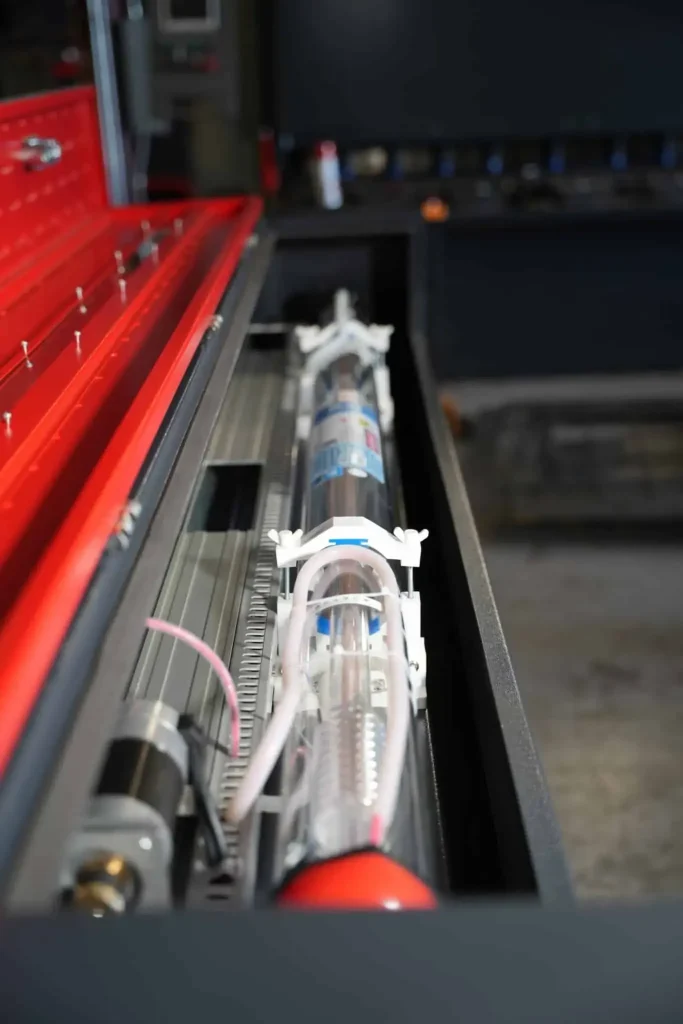
CO2 Laser Cutting Machines
CO2 laser cutting machines are among the most widely used in the industry, particularly for cutting non-metallic materials and thin metals. These lasers utilize a gas mixture, primarily carbon dioxide, to generate a high-powered beam. CO2 lasers are known for their versatility and cost-effectiveness, making them a popular choice for many manufacturing applications.
Key features of CO2 laser cutting machines include:
- High energy efficiency and power output ratio
- Excellent for cutting, boring, and engraving services
- Ideal for materials like acrylic, wood, and thin metals
- Capable of producing clean cuts with smooth edges
While CO2 lasers excel in cutting non-metals and thin metals, they may struggle with thicker or more reflective metals. This limitation has led to the development of other laser types more suited for heavy-duty metal cutting tasks.
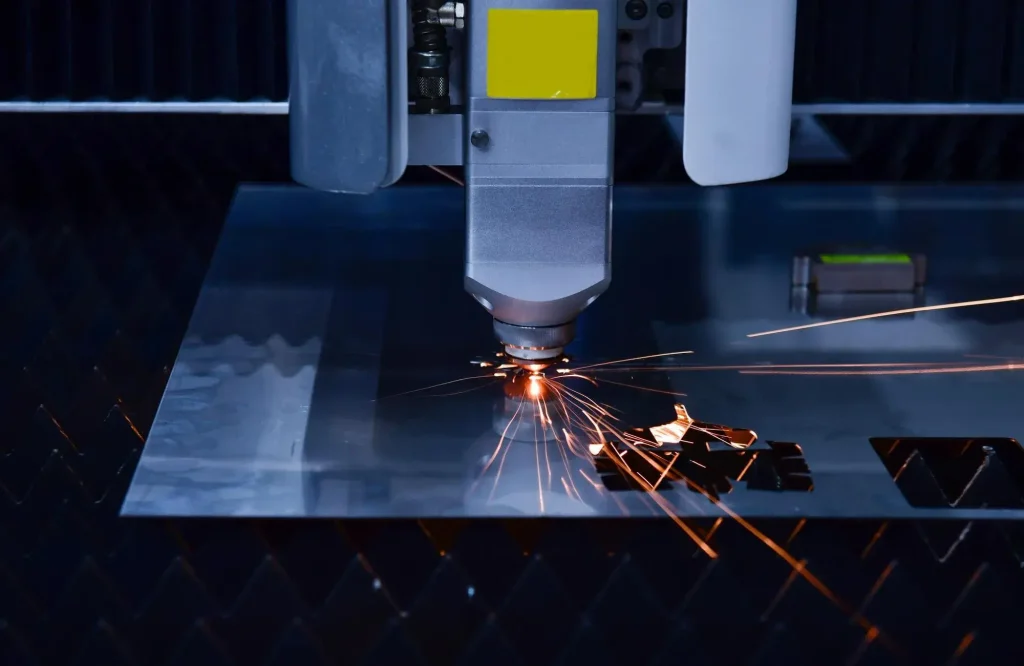
Fiber Laser Cutting Machines
Fiber laser cutting machines have gained significant popularity in recent years, especially for metal cutting applications. These lasers use a solid-state medium, typically a fiber optic cable doped with rare earth elements, to generate the laser beam. Fiber lasers offer several advantages over traditional CO2 lasers, particularly when it comes to cutting metals.
Advantages of fiber laser cutting machines include:
- Higher energy efficiency and lower operating costs
- Greater precision and faster cutting speeds for thin to medium-thickness metals
- Ability to cut reflective metals like copper and brass
- Longer lifespan and lower maintenance requirements
Fiber lasers have become the go-to choice for many metal fabrication shops due to their superior performance in cutting a wide range of metals, from thin sheets to moderately thick plates.
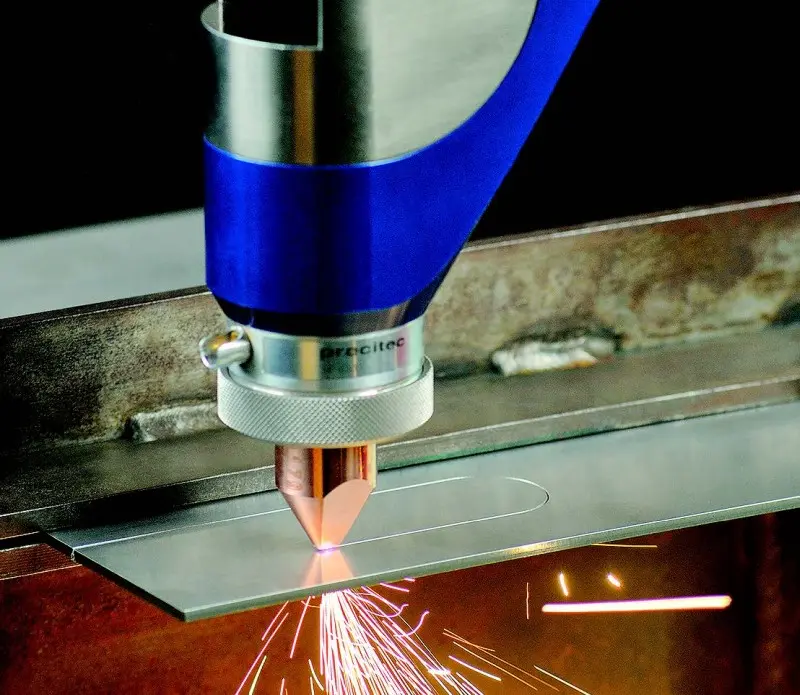
Direct Diode Lasers
Direct diode lasers are a newer entrant in the metal cutting arena, offering some unique advantages. These lasers use semiconductor diodes to generate the laser beam directly, resulting in high efficiency and compact design.
Key features of direct diode lasers include:
- Extremely high energy efficiency
- Compact size and lower power consumption
- Potential for faster cutting speeds in certain applications
- Lower initial investment compared to some other laser types
While direct diode technology is still evolving, it shows promise for certain metal cutting applications, particularly where energy efficiency and compact size are priorities.
Understanding the strengths and limitations of each laser type is crucial for selecting the most appropriate technology for specific metal cutting needs. Factors such as the type and thickness of metal, required precision, production volume, and budget all play a role in determining the best laser cutting solution. As technology continues to advance, we can expect further improvements in laser cutting capabilities, expanding the possibilities for metal fabrication across various industries.
Advantages of Metal Laser Cutting Services
Metal laser cutting services have transformed the landscape of manufacturing and fabrication, offering a multitude of advantages over traditional cutting methods. These benefits have made laser cutting an indispensable technology across various industries. Let’s explore the key advantages that make metal laser cutting services so valuable:
Precision and Accuracy
One of the most significant advantages of metal laser cutting is its unparalleled precision and accuracy. This technology allows for:
- Extremely tight tolerances, often within ±0.1mm or less
- Consistent cut quality across large production runs
- Ability to create intricate and complex designs with ease
- Minimal material deformation, resulting in parts that require little to no post-processing
The high level of precision offered by laser cutting is particularly crucial in industries like aerospace and medical device manufacturing, where even the slightest deviation can have significant consequences.
Versatility in Material and Design
Metal laser cutting services offer remarkable versatility, both in terms of the materials they can process and the designs they can produce:
- Compatibility with a wide range of metals and alloys, from thin sheets to thick plates
- Ability to cut complex shapes and patterns that would be difficult or impossible with traditional methods
- Flexibility to switch between different materials and thicknesses quickly
- Capability to create both large-scale components and minute, detailed parts
This versatility allows manufacturers to push the boundaries of design and explore new possibilities in product development.
Speed and Efficiency
Laser cutting technology significantly enhances production speed and efficiency:
- Rapid cutting speeds, especially for thin to medium-thickness materials
- Minimal setup time between different jobs or materials
- Reduced need for tool changes or adjustments
- Ability to nest parts efficiently, maximizing material usage
The speed and efficiency of laser cutting translate to faster turnaround times and increased productivity, allowing manufacturers to meet tight deadlines and respond quickly to market demands.
Cost-Effectiveness
While the initial investment in laser cutting equipment can be substantial, the technology offers several cost-saving benefits in the long run:
- Reduced material waste due to precise cutting and efficient nesting
- Lower labor costs due to automation and reduced need for manual intervention
- Minimal tooling costs, as laser cutting doesn’t require physical cutting tools
- Reduced need for secondary finishing operations, saving time and resources
These factors contribute to lower overall production costs, making laser cutting an economically viable option for both small-batch and large-scale production.
Quality and Consistency
Laser cutting produces high-quality cuts with exceptional consistency:
- Clean, smooth edges that often require no further finishing
- Minimal heat-affected zone, preserving material properties
- Consistent cut quality from the first part to the last in a production run
- Reduced risk of material contamination or deformation
This level of quality and consistency is crucial for industries with stringent quality control requirements, such as automotive and aerospace.
Flexibility and Customization
Metal laser cutting services offer unparalleled flexibility in manufacturing:
- Easy adaptation to design changes without the need for new tooling
- Ability to produce custom, one-off parts as easily as large production runs
- Quick turnaround for prototypes and small batch production
- Seamless integration with digital design and manufacturing workflows
This flexibility allows manufacturers to respond quickly to market trends and customer demands, facilitating innovation and customization.
Environmental Benefits
Laser cutting technology also offers several environmental advantages:
- Reduced material waste compared to traditional cutting methods
- Lower energy consumption, especially with modern fiber laser systems
- Minimal use of cutting fluids or lubricants, reducing chemical waste
- Potential for recycling of scrap material due to clean, contamination-free cuts
These environmental benefits align with the growing focus on sustainable manufacturing practices across industries.
Non-Contact Process
The non-contact nature of laser cutting provides unique advantages:
- No tool wear, resulting in consistent cut quality over time
- Ability to cut delicate or easily deformed materials without physical stress
- Reduced risk of material contamination
- Capability to cut pre-finished surfaces without damaging the finish
This aspect of laser cutting is particularly valuable when working with sensitive materials or in applications requiring the highest levels of cleanliness and precision.
The numerous advantages of metal laser cutting services have made this technology an essential part of modern manufacturing. From its unmatched precision and versatility to its cost-effectiveness and environmental benefits, laser cutting continues to drive innovation and efficiency across a wide range of industries. As the technology continues to evolve, we can expect these advantages to expand further, opening up new possibilities in metal fabrication and product design.
Applications Across Industries
Metal laser cutting services have found applications across a diverse range of industries, revolutionizing manufacturing processes and enabling the creation of complex, high-precision components. The versatility and efficiency of laser cutting technology have made it an indispensable tool in various sectors. Let’s explore some of the key industries benefiting from metal laser cutting services:
Aerospace and Defense
The aerospace and defense industries rely heavily on metal laser cutting for producing critical components with exacting specifications:
- Fabrication of lightweight yet strong structural components for aircraft and spacecraft
- Production of intricate parts for jet engines and turbines
- Manufacturing of precision components for guidance systems and avionics
- Creation of complex honeycomb structures for weight reduction in aerospace applications
Laser cutting’s ability to work with advanced materials like titanium and high-strength alloys makes it particularly valuable in this sector, where performance and reliability are paramount.
Automotive Manufacturing
In the automotive industry, metal laser cutting services play a crucial role in both prototyping and production:
- Cutting of body panels and structural components with high precision
- Fabrication of intricate parts for engines and transmissions
- Production of custom components for luxury and performance vehicles
- Rapid prototyping of new designs for testing and validation
The speed and flexibility of laser cutting allow automotive manufacturers to quickly adapt to design changes and produce complex parts efficiently.
Medical and Healthcare
The medical and healthcare sectors benefit from the precision and cleanliness of laser cutting in various applications:
- Manufacturing of surgical instruments and implants
- Production of components for medical devices and diagnostic equipment
- Fabrication of custom prosthetics and orthopedic devices
- Creation of micro-scale parts for minimally invasive surgical tools
The ability of laser cutting to work with biocompatible materials like titanium and stainless steel is particularly valuable in this industry, where material purity and precision are critical.
Electronics and Technology
In the fast-paced world of electronics and technology, laser cutting offers the precision and flexibility needed for innovation:
- Cutting of thin metal sheets for electronic enclosures and casings
- Fabrication of heat sinks and cooling components
- Production of intricate parts for smartphones and wearable devices
- Manufacturing of components for computer hardware and servers
The ability to create precise, clean cuts in thin materials makes laser cutting ideal for the miniaturization trends in electronics.
Energy and Power Generation
The energy sector relies on metal laser cutting for various applications in power generation and distribution:
- Fabrication of components for solar panels and wind turbines
- Production of parts for nuclear power plant equipment
- Manufacturing of precision components for oil and gas exploration tools
- Creation of custom parts for energy storage systems and batteries
Laser cutting’s ability to work with a wide range of materials, including corrosion-resistant alloys, is particularly valuable in this industry.
Architecture and Construction
In architecture and construction, metal laser cutting services enable the creation of both functional and decorative elements:
- Cutting of structural steel components with high precision
- Fabrication of custom architectural features and facades
- Production of intricate metal screens and partitions
- Creation of signage and decorative elements for buildings
The ability to cut complex patterns and designs opens up new possibilities for architectural expression and functionality.
Consumer Goods and Appliances
The consumer goods industry utilizes laser cutting for both functional and aesthetic purposes:
- Cutting of metal components for household appliances
- Fabrication of intricate parts for high-end consumer electronics
- Production of custom metal accessories and jewelry
- Manufacturing of components for sporting goods and fitness equipment
Laser cutting’s precision and ability to work with various materials allow for the creation of both durable and visually appealing consumer products.
Industrial Machinery and Equipment
In the realm of industrial machinery, laser cutting plays a crucial role in manufacturing:
- Production of precision components for manufacturing equipment
- Fabrication of parts for heavy machinery and construction equipment
- Cutting of custom components for industrial automation systems
- Manufacturing of specialized tools and fixtures for various industries
The versatility of laser cutting allows for the production of both large-scale and intricate components essential in industrial applications.
Jewelry and Luxury Goods
The jewelry and luxury goods sector benefits from the precision and intricacy possible with laser cutting:
- Creation of delicate and complex designs in precious metals
- Cutting of intricate patterns for high-end watches and accessories
- Fabrication of custom components for luxury goods
- Production of unique, one-of-a-kind pieces with unparalleled detail
Laser cutting’s ability to work with precious metals without contamination or damage makes it ideal for creating high-value, intricate items.
Renewable Energy
The growing renewable energy sector utilizes laser cutting in various applications:
- Fabrication of components for solar panels and photovoltaic cells
- Production of parts for wind turbine blades and generators
- Manufacturing of components for fuel cells and energy storage systems
- Creation of precision parts for geothermal and hydroelectric equipment
Laser cutting’s precision and efficiency contribute to the development and production of more effective and efficient renewable energy technologies.
The wide-ranging applications of metal laser cutting services across these diverse industries underscore the technology’s versatility and importance in modern manufacturing. As industries continue to evolve and new technologies emerge, the role of laser cutting is likely to expand further, enabling innovations and efficiencies across various sectors. The ability to produce complex, high-precision components quickly and cost-effectively makes metal laser cutting an indispensable tool in the ongoing advancement of manufacturing and product development.
Laser Cutting Process and Technology
The laser cutting process is a sophisticated technology that has revolutionized metal fabrication. Understanding the intricacies of this process is crucial for appreciating its capabilities and applications in various industries. Let’s delve into the details of how laser cutting works and the technology behind it:
Fundamental Principles of Laser Cutting
At its core, laser cutting relies on the focused energy of a laser beam to melt, vaporize, or burn away material. The process involves several key components:
- Laser Generation:
- A laser resonator generates a high-powered beam of coherent light
- Different types of lasers (CO2, fiber, Nd:YAG) are used depending on the application
- Beam Focusing:
- The laser beam is focused through a series of mirrors and lenses
- A focusing lens concentrates the beam to a tiny spot with extremely high energy density
- Material Interaction:
- The focused beam interacts with the material, causing localized heating
- Depending on the material and laser power, the process can involve melting, vaporization, or chemical degradation
- Assist Gas:
- An assist gas (typically oxygen, nitrogen, or compressed air) is used to:
- Blow away molten material
- Provide additional energy through exothermic reactions (in the case of oxygen)
- Protect the cut edge from oxidation (when using inert gases)
- An assist gas (typically oxygen, nitrogen, or compressed air) is used to:
- Motion Control:
- Precise CNC (Computer Numerical Control) systems guide the laser beam or the workpiece
- This allows for the creation of complex shapes and patterns with high accuracy
Types of Laser Cutting Processes
There are three main types of laser cutting processes, each suited for different materials and applications:
- Fusion Cutting:
- Used primarily for cutting metals
- The laser beam melts the material, and a high-pressure gas jet blows away the molten metal
- Ideal for stainless steel and aluminum
- Flame Cutting:
- Typically used for mild steel
- Oxygen is used as the assist gas, creating an exothermic reaction that aids in the cutting process
- Allows for faster cutting of thicker materials
- Sublimation Cutting:
- Used for materials that vaporize without melting (e.g., some plastics, wood)
- The material is vaporized directly from solid to gas
- Results in very clean cuts with minimal heat-affected zone
Advanced Laser Cutting Technologies
Recent advancements have further enhanced the capabilities of laser cutting:
- Fiber Laser Technology:
- Uses a solid-state medium to generate the laser beam
- Offers higher efficiency, lower operating costs, and better performance on reflective metals
- Ideal for cutting thin to medium-thickness metals with high precision
- High-Power CO2 Lasers:
- Capable of cutting thicker materials
- Still preferred for certain non-metallic materials
- Offers good cut quality across a wide range of materials
- Ultra-Short Pulse Lasers:
- Uses extremely short pulses (picoseconds or femtoseconds)
- Allows for “cold cutting” with minimal heat-affected zone
- Ideal for sensitive materials and micro-machining applications
- Hybrid Laser Systems:
- Combines laser cutting with other processes (e.g., plasma cutting)
- Offers the benefits of multiple technologies in a single machine
- Enhances versatility and efficiency in certain applications
Beam Delivery and Motion Systems
The precision of laser cutting relies heavily on advanced beam delivery and motion systems:
- Flying Optics:
- The workpiece remains stationary while the laser head moves
- Allows for high-speed cutting of large sheets
- Requires sophisticated motion control systems
- Moving Table:
- The laser head remains stationary while the workpiece moves
- Suitable for cutting heavier or larger materials
- Often used in combination with flying optics for maximum flexibility
- Galvanometer Scanners:
- Uses rapidly moving mirrors to direct the laser beam
- Allows for extremely fast and precise cutting of small parts
- Ideal for high-volume production of small components
akes laser cutting ideal for the miniaturization trends in electronics.
Process Monitoring and Control
Modern laser cutting systems incorporate advanced monitoring and control features:
- Real-Time Power Control:
- Adjusts laser power on-the-fly to maintain consistent cut quality
- Compensates for variations in material thickness or composition
- Adaptive Optics:
- Dynamically adjusts the focus and beam characteristics
- Ensures optimal cutting performance across different materials and thicknesses
- Vision Systems:
- Cameras and image processing software monitor the cutting process
- Allows for automatic alignment and quality control
- Predictive Maintenance:
- Sensors monitor various parameters of the laser system
- Predicts maintenance needs before failures occur, reducing downtime
Environmental and Safety Considerations
Laser cutting technology also addresses environmental and safety concerns:
- Fume Extraction:
- Advanced filtration systems remove harmful fumes and particles
- Ensures a safe working environment and compliance with regulations
- Energy Efficiency:
- Modern laser systems, especially fiber lasers, offer high energy efficiency
- Reduces power consumption and operating costs
- Safety Interlocks:
- Sophisticated safety systems prevent operator exposure to laser radiation
- Ensures compliance with laser safety standards and regulations
- Closed-Loop Cooling:
- Efficient cooling systems maintain optimal laser performance
- Reduces water consumption in industrial settings
The laser cutting process and its associated technologies continue to evolve, driven by demands for higher precision, faster processing speeds, and greater efficiency. As materials science advances and new applications emerge, we can expect further innovations in laser cutting technology. These advancements will likely focus on improving energy efficiency, expanding the range of materials that can be processed, and enhancing the integration of laser cutting with other manufacturing processes.
The ongoing development of laser cutting technology promises to open up new possibilities in metal fabrication, enabling the creation of increasingly complex and precise components across various industries. As the technology matures, it will continue to play a crucial role in shaping the future of manufacturing and product design.
Choosing the Right Metal Laser Cutting Service
Selecting the appropriate metal laser cutting service is crucial for ensuring the success of your manufacturing project. With the proliferation of laser cutting providers, it’s essential to consider several factors to make an informed decision. Here’s a comprehensive guide to help you choose the right metal laser cutting service for your specific needs:
Assess Your Project Requirements
Before beginning your search, clearly define your project’s needs:
- Material Specifications:
- Type of metal (e.g., steel, aluminum, titanium)
- Material thickness and dimensions
- Any special material properties or certifications required
- Design Complexity:
- Intricacy of the parts to be cut
- Tolerances and precision requirements
- Any specific features like holes, slots, or engravings
- Production Volume:
- Quantity of parts needed
- Frequency of orders (one-time, recurring, or on-demand)
- Potential for scaling production in the future
- Timeline:
- Required turnaround time
- Any critical deadlines or production schedules to meet
- Post-Processing Needs:
- Additional services required (e.g., bending, welding, finishing)
- Quality control and inspection requirements
Evaluate Technical Capabilities
Look for a service provider with the right technical capabilities to meet your needs:
- Laser Cutting Equipment:
- Types of lasers available (CO2, fiber, Nd:YAG)
- Power range and cutting capabilities
- Maximum material thickness that can be cut
- Precision and Accuracy:
- Achievable tolerances and edge quality
- Consistency across large production runs
- Ability to meet your specific precision requirements
- Material Handling:
- Size of the cutting bed
- Ability to handle your required material dimensions
- Automated material loading and unloading systems
- Software and Design Support:
- Compatibility with various CAD file formats
- Nesting software for optimal material utilization
- Design for manufacturing (DFM) support
- Additional Capabilities:
- Complementary services like bending, welding, or finishing
- Ability to handle prototyping and production runs
- Capacity for handling rush orders or large volumes
Consider Industry Experience and Expertise
Look for a service provider with relevant experience in your industry:
- Industry-Specific Knowledge:
- Familiarity with your industry’s standards and requirements
- Experience with similar projects or applications
- Understanding of industry-specific materials and finishes
- Portfolio and Case Studies:
- Examples of past projects similar to yours
- Demonstrated ability to handle complex or challenging cuts
- Track record of successful collaborations in your industry
- Certifications and Compliance:
- Relevant industry certifications (e.g., ISO 9001, AS9100 for aerospace)
- Compliance with industry-specific regulations
- Quality management systems in place
Evaluate Quality Assurance Processes
Ensure the service provider has robust quality control measures:
- Inspection Methods:
- In-process monitoring and quality checks
- Post-cutting inspection procedures
- Use of advanced measurement tools (e.g., CMM, optical scanners)
- Quality Standards:
- Adherence to recognized quality standards
- Documentation and traceability processes
- Ability to provide material certifications and quality reports
- Consistency:
- Measures to ensure consistency across production runs
- Process controls to maintain quality over time
- Continuous improvement initiatives
Assess Customer Service and Support
Consider the level of support and communication offered:
- Responsiveness:
- Speed of quote generation
- Accessibility of customer support
- Ability to address technical queries promptly
- Project Management:
- Dedicated point of contact for your projects
- Regular updates on project status
- Flexibility in handling design changes or rush orders
- Technical Support:
- Availability of engineering support for design optimization
- Assistance with material selection and process parameters
- Troubleshooting support for any issues that arise
Consider Pricing and Value
While cost is important, focus on overall value:
- Pricing Structure:
- Transparency in pricing
- Competitive rates for your specific needs
- Volume discounts or long-term contract options
- Hidden Costs:
- Any additional fees for setup, programming, or materials
- Charges for rush orders or design changes
- Shipping and handling costs
- Value-Added Services:
- Free design consultation or DFM support
- Inventory management or just-in-time delivery options
- Prototyping services or small batch production capabilities
Evaluate Turnaround Time and Capacity
Ensure the provider can meet your production needs:
- Lead Times:
- Standard turnaround times for different order volumes
- Ability to accommodate rush orders when needed
- Consistency in meeting promised delivery dates
- Production Capacity:
- Number and type of laser cutting machines available
- Ability to handle your current and future volume requirements
- Flexibility to scale production up or down as needed
Consider Location and Logistics
Think about how the provider’s location might impact your project:
- Proximity:
- Distance from your facility
- Impact on shipping times and costs
- Ease of on-site visits or collaborations if needed
- Shipping Options:
- Available shipping methods and carriers
- Packaging standards to protect parts during transit
- International shipping capabilities if required
- Inventory Management:
- Options for inventory holding or just-in-time delivery
- Integration with your supply chain management systems
- Ability to manage recurring orders or blanket purchase agreements
Check References and Reviews
Do your due diligence on potential service providers:
- Client Testimonials:
- Feedback from past clients in similar industries
- Specific examples of successful projects
- Long-term relationships with repeat customers
- Online Reviews:
- Ratings and reviews on industry platforms or directories
- Consistency of positive feedback across multiple sources
- How the company responds to any negative feedback
- Industry Reputation:
- Recognition or awards in the industry
- Participation in industry associations or events
- Thought leadership or contributions to industry advancements
Consider Future Needs and Scalability
Think beyond your immediate project:
- Technology Investments:
- Commitment to staying current with laser cutting technology
- Plans for future equipment upgrades or expansions
- Adoption of emerging technologies in the field
- Capacity for Growth:
- Ability to handle increased volumes as your needs grow
- Flexibility to adapt to changing project requirements
- Potential for long-term partnership and collaboration
- Additional Services:
- Potential to offer new services or capabilities in the future
- Ability to integrate with your evolving manufacturing processes
- Openness to custom solutions or process development
Choosing the right metal laser cutting service involves carefully considering these factors and how they align with your specific project needs and long-term manufacturing goals. By thoroughly evaluating potential providers across these areas, you can select a partner that not only meets your current requirements but also supports your future growth and innovation in metal fabrication.
Remember that the best choice often involves balancing various factors, including technical capabilities, quality, cost, and service. A provider that excels in all these areas and demonstrates a commitment to your success can become a valuable long-term partner in your manufacturing endeavors.
Professional Electrical Enclosure Manufacturer
Brings Excellent Services
How Can We Help Your Business?
What’s your company main products?
The main business is to provide customers with custom enclousure services, we also sell some General Boxes.
How about the price of the product?
We are a manufacturer, we mainly provide customized services for our customers, and we believe that our prices have enough advantages.
What does the enclosure customization service contain?
Box Sizes,Box Colors,Door Types,Gland Plates,Specific Cutouts,Moutning Plates,Protective Covers,Standing Types,Windows,Thickness,Accessories.
Can we get the sample? Is it free?
Yes, we could offer the general box sample for free charge,but need you pay the express. The freight depends on weight, packing size and your country or province region, etc.
What’s about MOQ?
First order MOQ=1pcs.
How can I get product catalogs?
You can get the catalogs by contacting us.
How to order our product?
1.Please tell us the model and quantity and other request you need.
2.We make the PI for you.
3.After you confirm the PI, we arrange the order for you after receiving your payment.
4.After the goods finished, we send the goods out to you and tell you the tracking number.
5.We will track your goods until you receive the goods.
How about the after-sale service?
If you meet any problems after sales, pis contact us freely, we’ll help solving the problems within 24 hours.
What’s the payment term?
100% T/T (large order, accept 30% T/T prepay 70% balance before shipping), Western Union, Paypal.
Related Blog

Reliable Electrical Enclosure Supplier in Africa

What Makes a High-Quality Electrical Control Cabinet?

Understanding Enclosure Thermostats: Why They Matter in Electrical Cabinet Systems
