
Modular Enclosure Systems: Best Practices for Efficient Installation


Did you know that poorly installed industrial enclosures account for 40% of equipment protection failures? This statistic highlights why proper installation of modular enclosure systems is crucial for protecting valuable equipment and ensuring operational reliability.
A well-designed modular enclosure offers superior protection and flexibility compared to traditional fixed enclosures. We have seen countless examples where a properly installed modular system example reduced installation time by 50% while providing better access for maintenance and future modifications.
In this comprehensive guide, we will walk through the essential components, pre-installation planning, step-by-step installation process, and quality assurance methods for modular enclosure systems. Whether you’re a first-time installer or an experienced professional, you’ll find valuable insights to ensure your next installation meets all safety and performance requirements.
Understanding Modular Enclosure Components
Electrical enclosures come in a wide variety of shapes, sizes, and materials, each designed to cater to specific industrial needs. Understanding the different types of enclosures and their applications is crucial for making informed decisions when it comes to protecting your electrical equipment.

Frame Structure and Design Elements
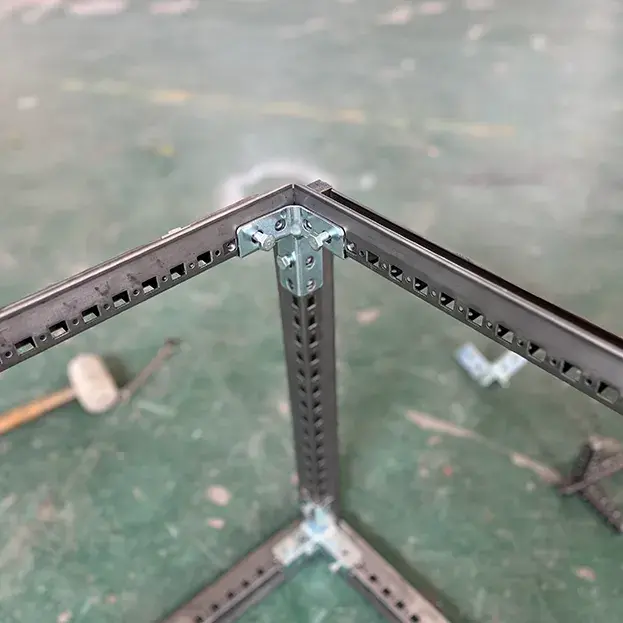
The heart of a modular enclosure is its frame-based design, which provides 30% more stability while reducing frame weight by 15% . We find that the frame consists of metal forms with strategically placed holes at standard distances, enabling seamless integration of accessories without drilling or welding. The strength comes from vertical frame members that efficiently transfer equipment weight, allowing for thinner, lighter external panels.

Panel Types and Configurations
In our experience, the versatility of modular enclosures comes from their panel configuration options. These include:
- Removable and reversible doors
- Interchangeable side panels
- Variable mounting plate positions
- Wall partition compatibility
- Configurable top panels with removable gland plates
Mounting Hardware and Accessories
The mounting system forms a crucial component of modular enclosures. We’ve found that modern designs incorporate multiple mounting levels inside the cabinet, supporting various installation options. The system includes essential components like mounting rails with square-punched holes, drop-in hardware for quick installation, and formed-in-place foam gasket technology that meets NEMA Type 12 and IP 55 protection ratings.
The frame structure creates both inner and outer mounting levels, maximizing the space for electronics within the enclosure. This design approach allows for baying on all sides using a straightforward combination of brackets, clamps, and standardized tools, making the system highly adaptable to different space requirements.
Pre-Installation Planning
Proper planning before installation is crucial for the success of any modular enclosure system project. We’ve found that thorough preparation can prevent up to 80% of common installation issues.
Site Assessment and Requirements
When evaluating the installation site, we must ensure the cement pad extends 6-8 inches larger than the enclosure on each side for proper anchorage. The foundation must be completely flat and capable of supporting a floor rolling load of 680kg (1500lb). For optimal stability, we recommend using stainless steel bolts or wedge anchors with 4-inch embedment, unless specified differently in application drawings.
Tool and Equipment Checklist
For efficient installation, we maintain the following essential tools:
- Heavy-duty leveling equipment
- Certified anchoring hardware
- Grounding verification tools
- Sealing and gasketing materials
- Standard hand tools for assembly
Safety Considerations and Compliance
Safety is paramount in modular enclosure installation. We strictly follow NFPA 70 guidelines and applicable sections of ANSI C2 for electrical safety compliance. For protection of both equipment and personnel, each cabinet must be individually grounded to the Telecommunications Equipment Bonding Conductor (TEBC).
When working with large cabinets, we ensure adequate assistance is available, as attempting to move them alone poses significant safety risks. The maximum resistance across bonded surfaces must be maintained at less than 5 milliohms. For installations in restricted access locations, we verify that only trained service personnel will have access to the equipment.
Pre-Installation Planning
Proper planning before installation is crucial for the success of any modular enclosure system project. We’ve found that thorough preparation can prevent up to 80% of common installation issues.
Site Assessment and Requirements
When evaluating the installation site, we must ensure the cement pad extends 6-8 inches larger than the enclosure on each side for proper anchorage. The foundation must be completely flat and capable of supporting a floor rolling load of 680kg (1500lb). For optimal stability, we recommend using stainless steel bolts or wedge anchors with 4-inch embedment, unless specified differently in application drawings.
Tool and Equipment Checklist
For efficient installation, we maintain the following essential tools:
- Heavy-duty leveling equipment
- Certified anchoring hardware
- Grounding verification tools
- Sealing and gasketing materials
- Standard hand tools for assembly
Safety Considerations and Compliance
Safety is paramount in modular enclosure installation. We strictly follow NFPA 70 guidelines and applicable sections of ANSI C2 for electrical safety compliance. For protection of both equipment and personnel, each cabinet must be individually grounded to the Telecommunications Equipment Bonding Conductor (TEBC).
When working with large cabinets, we ensure adequate assistance is available, as attempting to move them alone poses significant safety risks. The maximum resistance across bonded surfaces must be maintained at less than 5 milliohms. For installations in restricted access locations, we verify that only trained service personnel will have access to the equipment
Step-by-Step Installation Process
Let’s walk through the practical implementation of installing a modular enclosure system, building upon our careful planning and component understanding.
Frame Assembly and Alignment
We begin with the frame structure, which forms the backbone of the modular enclosure system. Our experience shows that proper alignment is crucial – the frame must be level and stable, with each component bolted securely to the building structure . For optimal stability, we ensure the four leveling feet make firm contact with the floor, preventing any rocking motion.
Panel Installation Sequence
Following our proven installation method, we implement these key steps:
- Install base channel with parallel beads of caulking
- Position corner panels into base channel
- Secure panels with appropriate fasteners
- Install wall and partition panels sequentially
- Add door panels as specified in drawings
The modular design allows us to slide panels into position from multiple angles, significantly improving installation efficiency compared to traditional unibody techniques.
Cable Management Integration
We’ve found that proper cable management is essential for long-term reliability. Our recommended practices include:
- Implementing separate pathways for different cable types
- Using hook and loop fasteners for bundle management
- Installing front-to-rear cable lashing brackets to prevent interference with equipment space
For enhanced protection, we integrate fully-adhered water-resistive barrier (WRB) membranes over sheathing on exterior walls, which proves particularly effective in preventing moisture migration. This approach ensures both cable protection and system integrity.
The design allows for varied cable configurations while maintaining flexibility for future modifications. We pay special attention to maintaining proper bend radii for optimal data transmission and ensure all bundles are fastened securely but not too tightly.
Quality Assurance and Testing
Quality assurance forms the cornerstone of reliable modular enclosure systems. We implement rigorous testing protocols to ensure each installation meets industry standards.
NEMA Standards Compliance
Our testing begins with NEMA standards verification. We ensure enclosures meet specific NEMA ratings based on their intended environment and application. For outdoor installations, we verify protection against rain, sleet, and snow, while maintaining structural integrity during ice formation. Indoor applications require protection against falling dirt and circulating dust, with additional safeguards against dripping and light splashing of non-corrosive liquids.
Grounding and EMI Protection
In our EMI protection testing, we achieve attenuation levels exceeding -85 dB over the range of 20MHz to 18 GHz. For enhanced protection, we implement:
- Conductive gaskets providing 85-100 dB shielding up to 10 GHz
- Metal-to-metal contact points for electrical continuity
- Specialized EMI filters on data ports
We verify grounding connections using certified testing equipment, ensuring resistance across bonded surfaces remains below 5 milliohms for optimal protection.
Performance Verification Methods
Our verification process follows IEEE 299 testing methodology. We conduct comprehensive inspections during:
- Receiving and processing phase
- Fabrication and assembly
- End-item verification
- Pre-shipping inspection
For specialized applications, we achieve attenuation effectiveness of 100dB at 1GHz and 95dB at 6GHz. We maintain detailed records of all inspections and tests, which remain available for 180 days after acceptance. This documentation ensures traceability and compliance with quality control requirements.
Conclusion
Proper installation of modular enclosure systems stands as a critical factor in equipment protection and operational reliability. Through our comprehensive exploration, we demonstrated how these systems offer superior flexibility and protection compared to traditional fixed enclosures.
This guide covered essential aspects of successful modular enclosure implementation:
- Component selection and understanding frame structures
- Thorough pre-installation planning and site assessment
- Systematic installation procedures with precise alignment
- Rigorous quality assurance testing meeting NEMA standards
Our experience shows that following these best practices reduces installation time by 50% while ensuring optimal equipment protection. The modular design approach, combined with proper cable management and EMI protection, creates a robust foundation for various industrial applications.
Quality testing results prove these systems achieve exceptional protection levels, with EMI attenuation exceeding -85 dB and grounding resistance maintained below 5 milliohms. These metrics confirm that properly installed modular enclosures meet strict industry standards while providing adaptability for future modifications.
Remember that successful implementation requires attention to detail during each phase – from initial planning through final testing. The investment in proper installation practices pays dividends through enhanced equipment protection, reduced maintenance needs, and extended system longevity.
Professional Electrical Enclosure Manufacturer
Brings Excellent Services
How Can We Help Your Business?
What’s your company main products?
The main business is to provide customers with custom enclousure services, we also sell some General Boxes.
How about the price of the product?
We are a manufacturer, we mainly provide customized services for our customers, and we believe that our prices have enough advantages.
What does the enclosure customization service contain?
Box Sizes,Box Colors,Door Types,Gland Plates,Specific Cutouts,Moutning Plates,Protective Covers,Standing Types,Windows,Thickness,Accessories.
Can we get the sample? Is it free?
Yes, we could offer the general box sample for free charge,but need you pay the express. The freight depends on weight, packing size and your country or province region, etc.
What’s about MOQ?
First order MOQ=1pcs.
How can I get product catalogs?
You can get the catalogs by contacting us.
How to order our product?
1.Please tell us the model and quantity and other request you need.
2.We make the PI for you.
3.After you confirm the PI, we arrange the order for you after receiving your payment.
4.After the goods finished, we send the goods out to you and tell you the tracking number.
5.We will track your goods until you receive the goods.
How about the after-sale service?
If you meet any problems after sales, pis contact us freely, we’ll help solving the problems within 24 hours.
What’s the payment term?
100% T/T (large order, accept 30% T/T prepay 70% balance before shipping), Western Union, Paypal.
Related Blog

Reliable Electrical Enclosure Supplier in Africa

What Makes a High-Quality Electrical Control Cabinet?

Understanding Enclosure Thermostats: Why They Matter in Electrical Cabinet Systems
