
VFD Enclosure Cooling: Fan or Air Conditioner? Choosing the Wrong Solution Can Cause Overheating Problems

Julian Zheng,[email protected]
2026-08-09
On This Page
Introduction
When designing a VFD (Variable Frequency Drive) enclosure, one of the most common questions we receive is:
Should we use cooling fans or an industrial air conditioner?
Many customers try to reduce the initial cost and think:
“Can we just install some fans? Do we really need an air conditioner?”
The answer depends on the application.
Choosing the wrong cooling method may save money at the beginning, but it can lead to frequent overheating alarms, unexpected shutdowns, and much higher costs later.
VFDs Are One of the Biggest Heat Sources Inside an Electrical Cabinet
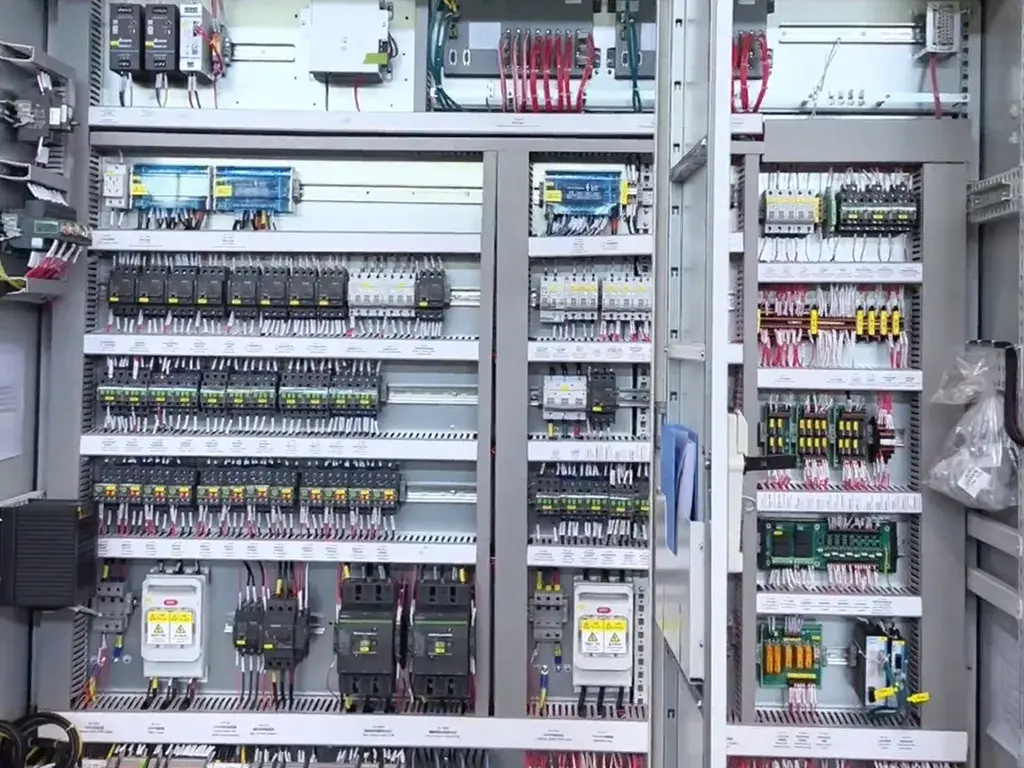
A VFD is a high-performance electrical device, but it also generates significant heat during operation.
If the heat is not properly managed, the enclosure temperature can rise quickly, causing:
- Over-temperature alarms
- Reduced VFD performance
- Frequent protective shutdowns
- Shorter component lifetime
- Unexpected production downtime
For industrial applications, a cooling problem is not only an equipment problem — it can become a production problem.
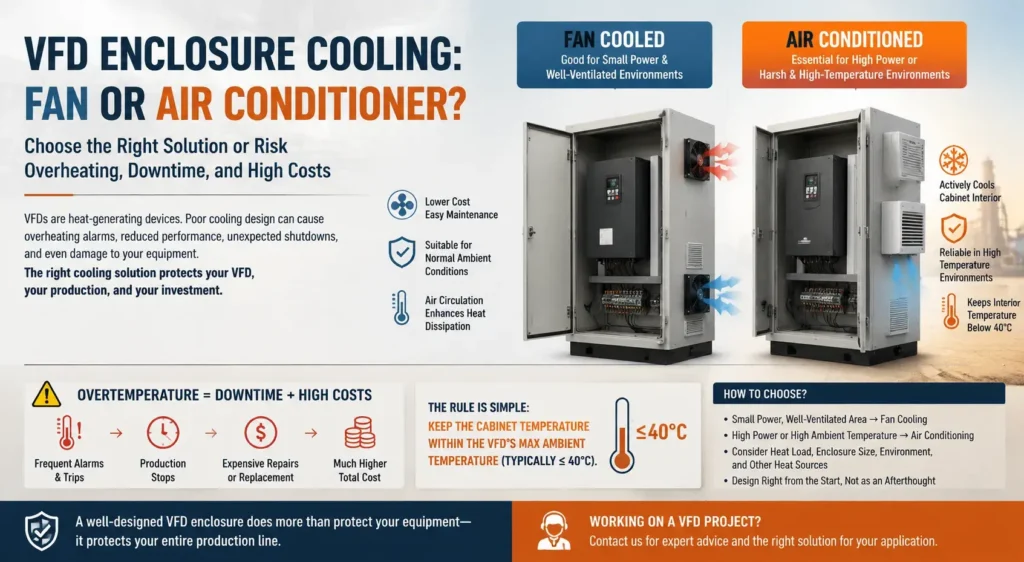
Small Power VFDs: Fan Cooling May Be Enough

Not every VFD enclosure requires an air conditioner.
For applications with:
- Small or medium power VFDs
- Large enough enclosure space
- Good ventilation conditions
- Normal ambient temperature
- Low heat density inside the cabinet
A cooling fan with filter ventilation may be a practical solution.
The working principle is simple:
- Cool air enters the enclosure
- Hot air is removed by forced airflow
- Internal temperature is reduced through air circulation
This solution has several advantages:
- Lower initial cost
- Easy maintenance
- Simple installation
For many indoor industrial environments, fan cooling is completely sufficient.
Large Power VFDs: Why Air Conditioning May Be Necessary
When the VFD power increases, or the installation environment becomes more challenging, fans may no longer be enough.
Examples include:
- Large capacity VFD systems
- Multiple VFDs installed in one cabinet
- High-density electrical components
- High ambient temperature areas
- Dusty or oily environments
- Fully sealed enclosures requiring high protection levels
The key limitation of fans is:
Fans can move air, but they cannot reduce the temperature of the surrounding environment.
If the outside air temperature is already very high, the fan will simply bring hot air into the enclosure.
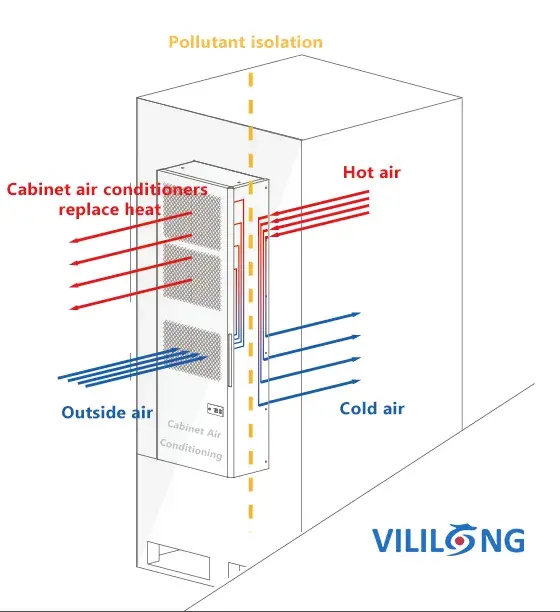
In these situations, an industrial cabinet air conditioner can actively remove heat and maintain a stable internal temperature.
The Basic Rule: Keep the Cabinet Temperature Within the VFD Requirement
The correct cooling method should not be selected based only on experience or cost.
The most important reference is:
The maximum ambient temperature specified in the VFD manufacturer’s datasheet.
Many VFD manufacturers specify a maximum operating ambient temperature of around:40°C
If the cabinet temperature exceeds this range for a long period:
- Performance may decrease
- Protection functions may activate
- Service life may be reduced
A proper thermal design should consider:
- VFD heat generation
- Enclosure size
- Ambient temperature
- Installation location
- Other heat-generating components
Saving Money on Cooling Can Become More Expensive Later
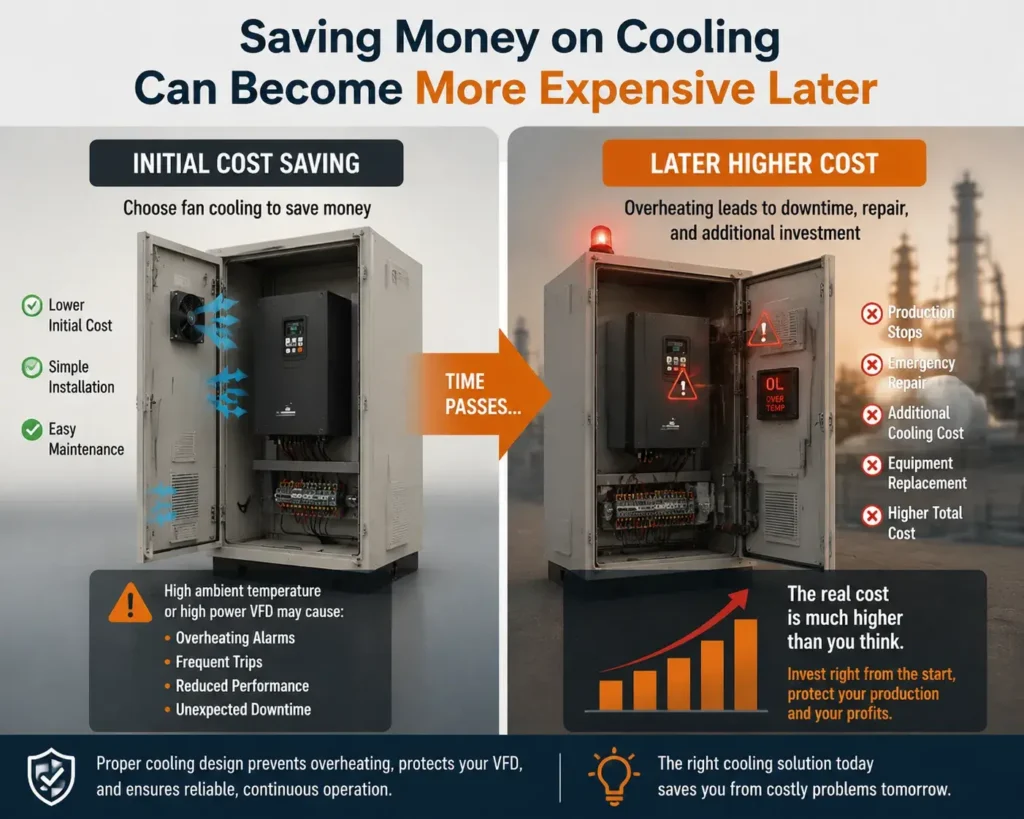
We have seen projects where customers chose fans instead of air conditioning to reduce the initial cost.
At the beginning, everything seemed normal.
However, during hot seasons:
- The VFD started generating overheating alarms
- The machine stopped unexpectedly
- Production efficiency was affected
Eventually, the customer had to add additional cooling equipment.
The real cost included:
- New cooling equipment
- Modification work
- Labor costs
- Production downtime
- Risk of equipment damage
The money saved during the initial design was quickly exceeded by the later losses.
There Is No Most Expensive Solution — Only the Right Solution
Choosing between fan cooling and air conditioning depends on the actual application.
| Application Condition | Recommended Cooling Solution |
|---|---|
| Small power VFD, normal environment | Fan cooling + filter |
| Medium heat load cabinet | Fan cooling or heat exchanger |
| Large power VFD | Industrial air conditioner |
| High ambient temperature | Industrial air conditioner |
| Dust/oil environment | Sealed enclosure + air conditioner |
| Outdoor installation | Select based on environment |
Thermal Management Should Be Considered Before Production
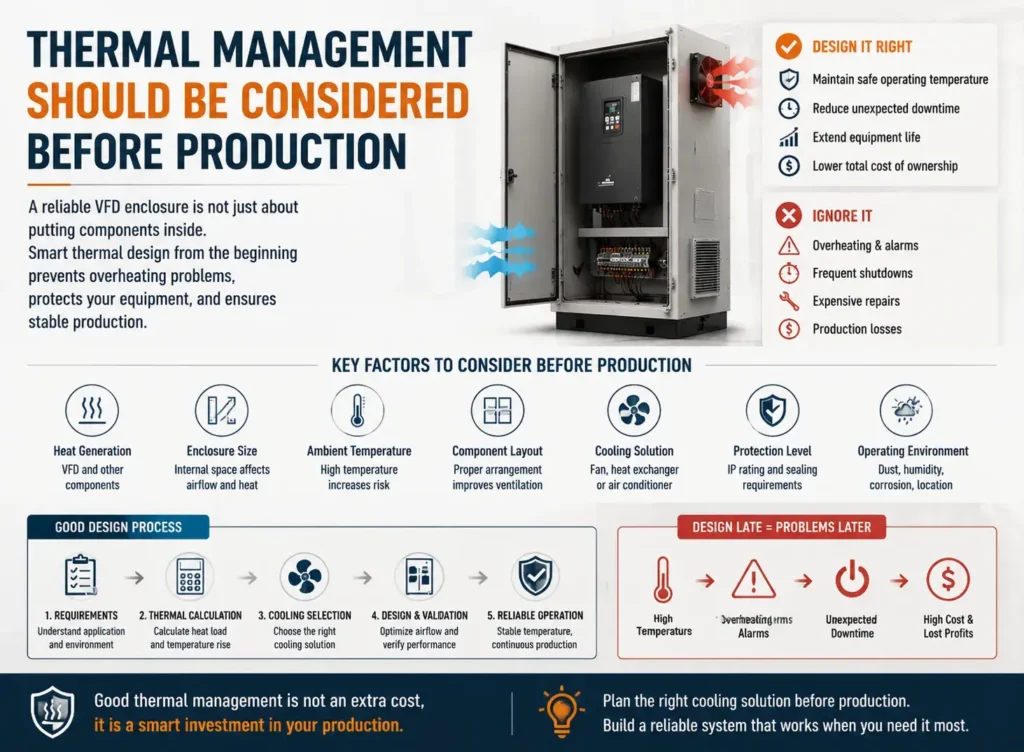
A VFD enclosure is not simply a metal box holding electrical components.
A reliable design should consider:
- Cabinet size
- Component layout
- Airflow design
- Cooling method
- Protection rating
- Operating environment
Many overheating problems are not caused by poor VFD quality.
They are caused by insufficient enclosure thermal design.
A properly designed VFD enclosure does more than protect your equipment — it protects your entire production system.
If you are working on a VFD enclosure or industrial control cabinet project, we can help evaluate the suitable cooling solution based on your application requirements.