
Why Stainless Steel Enclosures Outperform All Other Materials: Expert Analysis
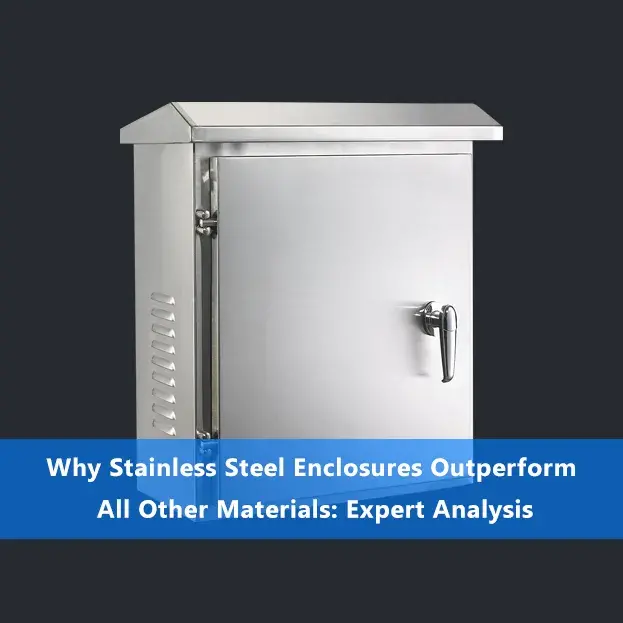
Stainless steel enclosures are the clear winners when it comes to protecting sensitive electrical components in challenging environments. These durable solutions might cost more upfront than plastic or aluminum alternatives. However, their exceptional lifespan and low maintenance needs make them more affordable in the long run. Their effectiveness comes from a special alloy mix that has chromium. This creates a passive protective layer that works as a shield against rust and corrosion, even when exposed to high moisture or chemicals.
Choosing the right stainless steel enclosure box means you need to understand grade differences. The two main choices are 304 and 316 grade stainless steel. The 316 grade offers better protection against corrosion, which works great in salty environments. Stainless steel electrical panels have become the top choice in many industries. Hospitals, pharmaceutical plants, waste treatment facilities, and oil processing plants prefer them for their versatility and cleanliness. These electrical boxes are easy to maintain – they just need an occasional wipe-down. This saves time and resources compared to other materials. On top of that, most manufacturers now highlight their products’ 100% recyclability. This addresses environmental concerns while meeting strict National Electrical Manufacturers Association (NEMA) ratings for reliable performance in various settings.
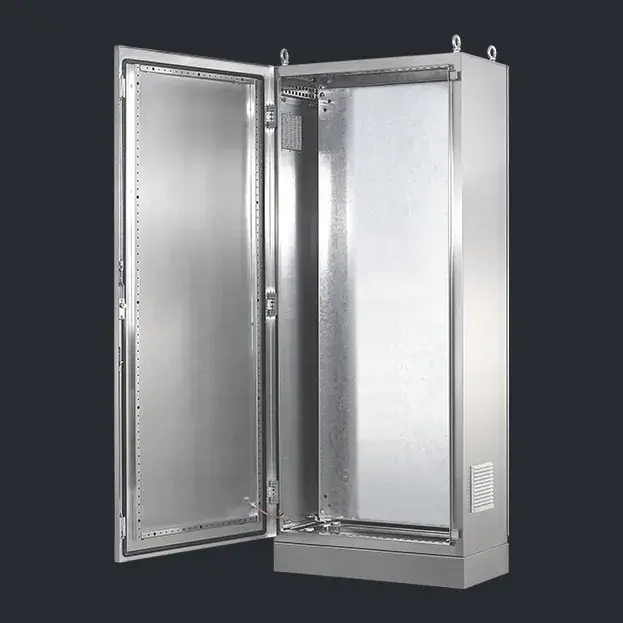
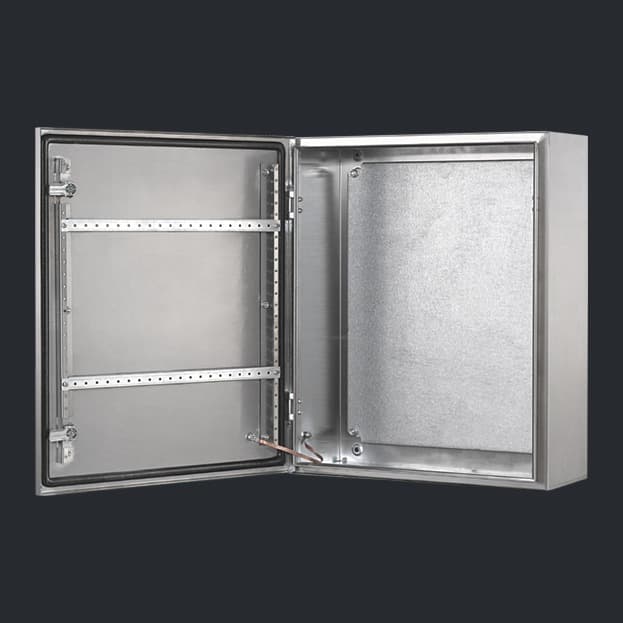


Material Science Behind Stainless Steel Superiority
Stainless steel enclosures work exceptionally well because of their unique material makeup. Regular steel can’t match stainless steel’s properties, which come from having at least 10.5% chromium in its composition.
Chromium Oxide Layer Formation and Corrosion Resistance
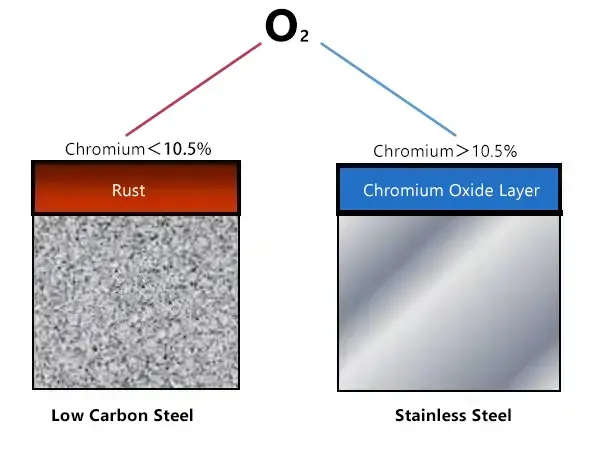
The chromium in stainless steel reacts with oxygen quickly. This reaction creates a microscopic chromium oxide layer that’s just microns thick and forms within nanoseconds. This invisible protective barrier blocks corrosion by keeping oxygen away from the iron underneath. The surface will heal itself automatically if it gets scratched or damaged. This self-healing feature explains why stainless electrical boxes look great even after serving in tough conditions over the last several years.
304 vs 316 Stainless Steel: Composition and Applications
Manufacturers use two main grades of stainless steel that have different chemical compositions:
Type 304 stainless steel has 18-20% chromium and 8-10.5% nickel, which works great for basic applications. Type 316 contains 16% chromium, 10% nickel, and adds 2-3% molybdenum. Adding molybdenum boosts corrosion resistance by a lot, especially where there’s chloride. Type 304 handles water with up to 100 ppm chloride, while Type 316 can take up to 1000 ppm chloride.
Type 316 stainless steel electrical panels are crucial near coastal areas or chemical plants. Type 304 serves as a cost-effective choice in milder environments.
| Property | SUS304 | SUS316 |
|---|---|---|
| Corrosion Resistance | Good | Excellent (better for marine & chemical environments) |
| Molybdenum (Mo) Content | 0% | 2-3% |
| Strength & Durability | High | Slightly higher |
| Cost | Lower | ~20-30% higher |
| Best For | General industrial enclosures | Harsh environments (marine, chemicals, saltwater) |


Thermal Stability and Strength-to-Weight Ratio Explained
These stainless steel enclosure boxes can handle extreme heat. They work in temperatures up to 870°C for short periods and 925°C continuously. Electronics stay safe inside thanks to this impressive heat resistance.
Stainless steel’s strength-to-weight ratio makes it perfect for jobs that need tough but lightweight materials. With a Young’s modulus of about 200 GPa, these enclosures can handle heavy loads without bending much. This feature matters a lot for industrial boxes that protect equipment while staying easy enough to install and maintain.
Performance Metrics: Stainless Steel vs Other Materials
Lab tests confirm why professionals choose stainless steel enclosures for their toughest applications. These tests show that stainless steel performs better than other materials in several key areas.
Corrosion Resistance Tests: Stainless Steel vs Aluminum
Both materials create protective layers on their surface. Stainless steel forms chromium oxide while aluminum develops aluminum oxide. Aluminum doesn’t rust because it has no iron. But stainless steel holds up better in harsh environments. Aluminum can fail quickly when it meets strong acids or bases. Type 316 stainless steel, with its molybdenum content, resists sulfates, bromides, chlorine, and sea water exceptionally well. This makes stainless steel panels the best choice for coastal installations where salt speeds up oxidation.
| Feature | Stainless Steel | Aluminum |
|---|---|---|
| Corrosion Protection | Forms chromium oxide layer, highly resistant to corrosion, especially in harsh environments like coastal areas. | Forms aluminum oxide layer, resistant to corrosion, but less effective in strong acids/bases. |
| Strength and Durability | High tensile strength, more durable, resistant to impact and deformation. | Lighter, less strong than stainless steel, more prone to dents and scratches. |
| Weight | Heavier, making it harder to handle and install in large sizes. | Lightweight, easy to handle, and ideal for applications where weight is a concern. |
| Cost | Higher cost due to material and manufacturing complexity. | Generally cheaper, making it a more budget-friendly option for less demanding environments. |
| Environmental Suitability | Best for harsh environments, including coastal installations and areas exposed to chemicals. | Suitable for moderate environments, but can degrade in extreme conditions like high heat or saltwater. |
| Appearance | Sleek, polished finish, visually appealing in high-end installations. | Matte finish, less polished, but can be anodized for a cleaner appearance. |
| Heat Resistance | Excellent resistance to high temperatures and extreme conditions. | Performs well at moderate temperatures but softens under high heat. |
Impact Resistance Comparison with Fiberglass and Plastic
Aluminum enclosures usually get IK9 ratings in impact tests, while stainless steel ones get IK8. But these materials react differently under stress. Aluminum bends instead of breaking, and fiberglass can crack from heavy impacts. Stainless steel boxes are a great way to get protection against vandalism and physical damage. They need almost no maintenance, which makes them perfect for high-traffic areas or remote spots where regular checks are tough.
Thermal Conductivity and Heat Management in Stainless Electrical Box
Type 316 stainless steel’s thermal conductivity measures between 7.43 and 17.0 Btu hr-1ft-2ft OR-1 from 0°F to 1800°F. This lower conductivity compared to aluminum brings challenges and benefits. Electronic components lose half their reliability with every 18°F rise above room temperature. Stainless steel enclosure makers tackle this through:
- Surface area optimization (key to heat dissipation)
- Circulating fans (boost heat dissipation by up to 10 percent)
- Shielding techniques to cut down solar heat in outdoor uses
The stainless steel enclosure’s size becomes crucial for applications where heat is a concern
Certifications and Standards for Stainless Steel Enclosures
Stainless steel enclosure selection relies heavily on industry-recognized certifications and regulatory compliance. These standardized ratings help ensure enclosures meet specific protection requirements under various environmental conditions.
NEMA 4X and 12 Ratings for Stainless Steel Electrical Panel
The National Electrical Manufacturers Association (NEMA) sets significant standards for stainless steel electrical panels. NEMA 4X enclosures shield against windblown dust, rain, splashing water, hose-directed water, and corrosion. This rating makes these enclosures perfect for indoor and outdoor use, including offshore environments. Stainless steel enclosures with NEMA 4X certification prove especially valuable in food processing, wastewater treatment, and coastal installations.
NEMA 12 protects against dust and dripping non-corrosive liquids, making it ideal for indoor industrial settings. Most manufacturers design their stainless steel enclosures to meet multiple NEMA specifications, which provides versatility in different environments.
UL and IEC Certification Requirements for Industrial Use
North American markets demand Underwriters Laboratories (UL) certification for stainless steel enclosures. UL 508A and UL 50E standards verify environmental protection against dust, water, and corrosion through rigorous testing. The certification process includes factory inspections, periodic audits, and ongoing compliance checks.
The International Electrotechnical Commission (IEC) standards govern global markets. Products must pass accredited laboratory testing before certification. Many manufacturers seek dual certification to ensure worldwide compatibility and market access.
Importance of IP Ratings in Stainless Steel Enclosure Box Selection
International standard EN 60529 defines IP (Ingress Protection) ratings that provide precise metrics for stainless electrical box protection levels. The two-digit code shows protection against solids (first digit) and liquids (second digit):
IP65 – “Dust tight” and protected against water projected from a nozzle IP66 – “Dust tight” and protected against powerful water jets IP67 – “Dust tight” and protected against temporary immersion (30 minutes at depths 150mm-1000mm) IP68 – “Dust tight” and protected against continuous submersion
The right IP rating depends on your specific environmental challenges. You should evaluate exposure to dust, moisture, and corrosive elements to determine the appropriate protection level for your application.
Lifecycle Cost Analysis and Long-Term Value
The true economic value of stainless steel enclosures goes beyond what you see on price tags. The total ownership cost tells a different story than the purchase price over an enclosure’s lifecycle.
| Feature | Stainless Steel Enclosures | Other Materials (Carbon Steel, Fiberglass, Plastic) |
|---|---|---|
| Upfront Purchase Price | Higher initial cost due to material and manufacturing complexity. | Lower upfront cost. |
| Maintenance Costs | Minimal maintenance required, just basic cleaning with standard agents. | Frequent maintenance may be needed depending on material. |
| Durability | Lasts 20-30 years or more, resistant to chipping, cracking, and breaking. | Needs replacement more frequently. |
| Replacement Cycles | Fewer replacements due to superior durability and self-repairing properties. | Higher replacement frequency, increasing long-term costs. |
| Environmental Impact | 100% recyclable, reducing environmental footprint. | Generally less recyclable, contributing more waste. |
| Recyclability | 100% recyclable, with up to 60% recycled content. | May not be fully recyclable or require more energy to recycle. |
Conclusion
Our analysis shows why stainless steel enclosures perform better than other materials in key areas. The science is straightforward – a chromium oxide layer creates self-healing protection against corrosion. Type 316 stainless steel’s molybdenum improves this protection even further. Without doubt, this better corrosion resistance means less maintenance and a service life that spans decades instead of years.
Stainless steel beats aluminum, fiberglass, and plastic enclosures in tough environments. The original cost might be higher, but lifecycle analysis confirms it offers better long-term value through minimal upkeep and fewer replacements. It also makes environmental sense – stainless steel is completely recyclable, and today’s products contain about 60% recycled material.
NEMA 4X, UL listings, and complete IP ratings confirm stainless steel’s protective qualities. These standard ratings ensure reliable performance in many applications from food processing plants to offshore platforms.
The evidence is clear. Even with higher upfront costs, stainless steel enclosures end up being more economical over their longer lifespan. They also provide the best protection for sensitive electrical components. This mix of durability, low maintenance needs, and environmental benefits makes stainless steel the clear choice for professionals who want top-quality enclosure solutions in challenging environments.
Professional Stainless Steel Enclosure Manufacturer
Brings Excellent Services
How Can We Help Your Business?
What’s your company main products?
The main business is to provide customers with custom enclousure services, we also sell some General Boxes.
How about the price of the product?
We are a manufacturer, we mainly provide customized services for our customers, and we believe that our prices have enough advantages.
What does the enclosure customization service contain?
Box Sizes,Box Colors,Door Types,Gland Plates,Specific Cutouts,Moutning Plates,Protective Covers,Standing Types,Windows,Thickness,Accessories.
Can we get the sample? Is it free?
Yes, we could offer the general box sample for free charge,but need you pay the express. The freight depends on weight, packing size and your country or province region, etc.
What’s about MOQ?
First order MOQ=1pcs.
How can I get product catalogs?
You can get the catalogs by contacting us.
How to order our product?
1.Please tell us the model and quantity and other request you need.
2.We make the PI for you.
3.After you confirm the PI, we arrange the order for you after receiving your payment.
4.After the goods finished, we send the goods out to you and tell you the tracking number.
5.We will track your goods until you receive the goods.
How about the after-sale service?
If you meet any problems after sales, pis contact us freely, we’ll help solving the problems within 24 hours.
What’s the payment term?
100% T/T (large order, accept 30% T/T prepay 70% balance before shipping), Western Union, Paypal.
Related Blog

Reliable Electrical Enclosure Supplier in Africa

What Makes a High-Quality Electrical Control Cabinet?

Understanding Enclosure Thermostats: Why They Matter in Electrical Cabinet Systems
